TL;DR: Use one credit card for all purchases, pay it off in full twice monthly (aligned with your paychecks), and never pay interest again. This simple strategy helps you avoid debt, earn cash back rewards, and improve your credit score with minimal effort.
The Core Principle
In the complex world of personal finance, credit cards often get a bad reputation. But what if there's a smart, straightforward way to use credit cards that actually benefits your financial health?
Imagine a credit card strategy that:
- Helps you avoid interest charges completely
- Earns you cash back or rewards points
- Improves your credit score
- Requires minimal effort and mental overhead
Sound too good to be true? It's not. I personally use this strategy myself and coached others to use same.
The Setup: "One Card to Rule Them All"
The basic idea is simple: commit to using a single credit card for all your transactions and set the others aside. By focusing on one card, you'll:
- Effortlessly track expenses in one place instead of juggling multiple statements
- Simplify your life with just one payment to manage, reducing the chances of missed payments
- Avoid the confusion that comes from chasing points across multiple cards and hunting for rotating category bonuses—because let's face it, that often creates more chaos than rewards
How the Strategy Works
Timing is Everything
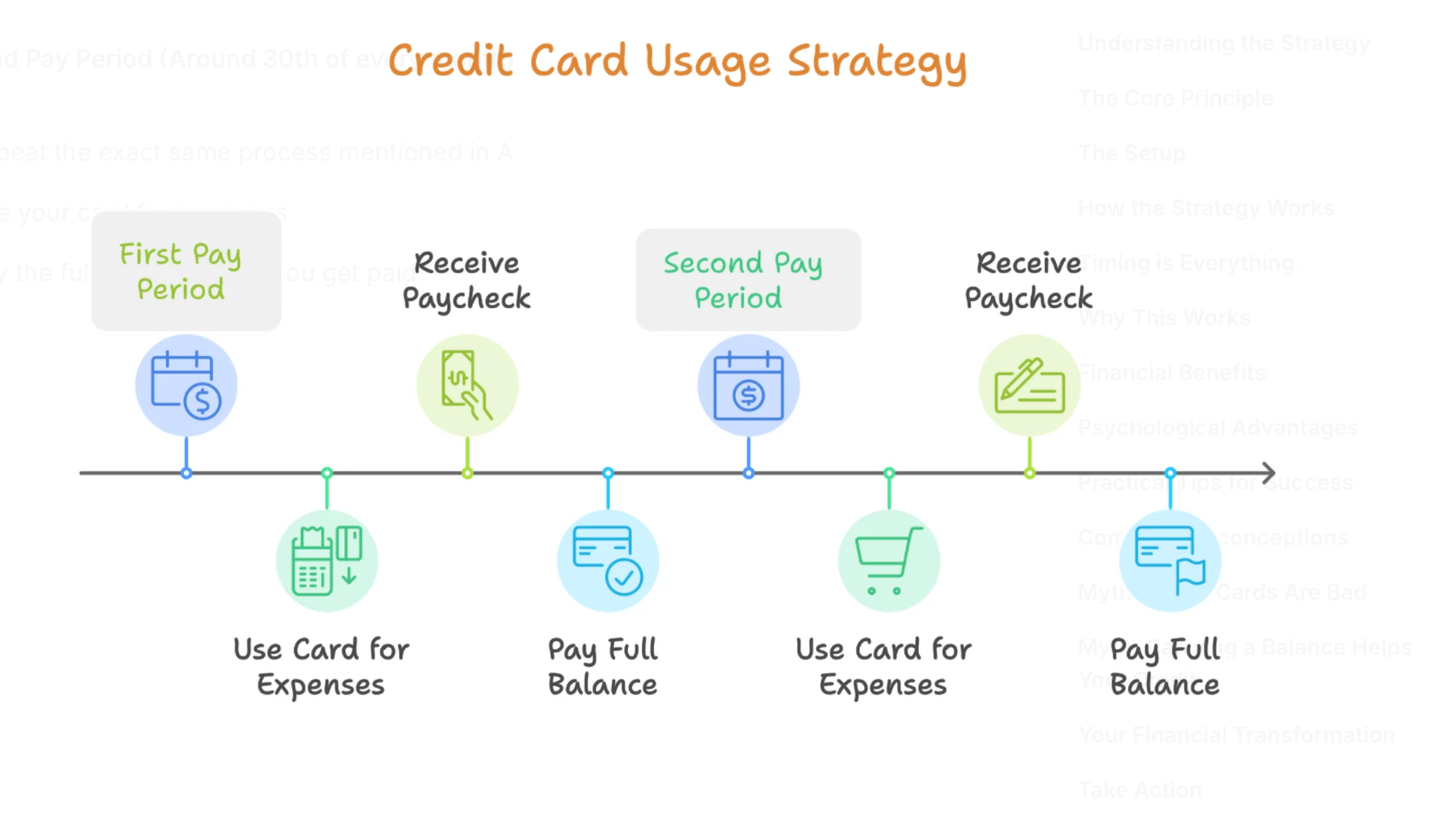
The key to this credit card strategy is aligning your card payments with your pay schedule. Here's the exact system:
First Pay Period (Days 1-15 of the Month)
- Use your credit card for all regular expenses from the 1st to the 15th (or whenever you receive your first paycheck of the month)
- This includes:
- Utility bills
- Groceries
- Gas and transportation
- Regular monthly purchases
- When you receive your paycheck around the 15th, pay the FULL balance immediately
Second Pay Period (Days 16-30 of the Month)
- Repeat the exact same process
- Use your card for all expenses from the 16th through month-end
- When you receive your second paycheck (around the 30th), pay the full balance immediately
This creates a continuous cycle where you're never carrying a balance beyond your next paycheck.
Why This Works
Financial Benefits
Zero Interest Charges
By paying the full balance every pay period (twice monthly or weekly if you pay schedule allows), you completely avoid interest charges. Here's what that means in real dollars:
Example Calculation:
- Average credit card balance: $2,000/month
- Average credit card APR: 18%
- Traditional approach (carrying balance): $360/year in interest
- Biweekly payoff strategy: $0/year in interest
That's $360 saved annually—enough for a weekend getaway or emergency fund contribution.
Cash Back Rewards
Most credit cards offer 1-2% cash back on purchases. Using the same $2,000 monthly spending:
- Annual spending: $24,000
- Cash back at 1.5%: $360/year
- Net benefit: $360 saved in interest + $360 earned in rewards = $720/year
Credit Score Boost
Consistent, full payments twice monthly demonstrate strong financial responsibility to credit bureaus. Your credit utilization ratio stays low (a major factor in your score), and you build a perfect payment history.
Psychological Advantages
Beyond the numbers, this strategy:
- Simplifies financial management - One card, one system, predictable routine
- Creates accountability - You see exactly where your money goes every two weeks
- Removes debt stress - Never worry about accumulating credit card debt
- Builds confidence - You're in complete control of your finances
Practical Tips for Success
1. Choose the Right Card
Look for a credit card with:
- No annual fee - Why pay to use your own money?
- Good cash back percentages - Aim for at least 1.5% on all purchases
- Rewards that match your spending habits - But remember: these are bonuses; don't spend extra just to earn rewards
2. Track Your Spending Religiously
- Use your bank's mobile app to monitor transactions daily
- Set up spending alerts to stay aware of your balance
- Critical rule: If you can't pay the full balance before the next pay period, don't put it on your credit card
3. Maintain an Emergency Buffer
- Always keep a buffer in your checking account (ideally 1-2 weeks of expenses)
- This ensures you can pay the full credit card balance even if unexpected expenses arise
- Never cut your checking account so close that the card payment would overdraw it
Common Misconceptions
Myth: Credit Cards Are Bad
Reality: Credit cards are a tool. Used wisely with this biweekly/weekly payoff strategy, they become a powerful financial instrument that saves you money and builds wealth through rewards.
Myth: Carrying a Balance Helps Your Credit Score
Reality: This is one of the most damaging financial myths. Paying your full balance twice monthly is what truly builds a strong credit score. Carrying a balance only means you're paying unnecessary interest—it doesn't help your credit.
Your Financial Transformation
This strategy isn't about complicated financial maneuvers or cutting coupons for hours. It's about:
- Making one smart choice (the right card)
- Following one simple system (pay in full every paycheck)
- Leveraging financial tools effectively (rewards without risk)
Take Action
Start implementing this strategy today:
- Week 1: Choose your primary card and set others aside
- Week 2: Align your first payment with your next paycheck
- Month 1-3: Build the habit and track results
After three months, evaluate your:
- Cash back earnings (should be growing)
- Credit score changes (should be improving)
- Stress levels around finances (should be decreasing)
- Interest charges paid (should be zero)
Conclusion: Key Takeaways
What you learned:
- ✓ One card simplifies everything - Track expenses in one place, manage one payment
- ✓ Biweekly payoff eliminates interest - Pay in full with each paycheck = $0 interest charges
- ✓ Rewards add up fast - Earn 1-2% cash back on spending you're already doing
- ✓ Your credit score benefits - Perfect payment history + low utilization = higher score
Remember: Financial wellness is a journey, not a destination. This credit card strategy is one simple habit that compounds into significant long-term benefits.
Disclaimer: This content is educational and not financial advice. Credit card terms vary by issuer. Always read your card agreement and consult a financial advisor for personalized guidance. Pay attention to your spending habits and only use this strategy if you have consistent income and can commit to paying balances in full.